
Last updated November 21, 2026
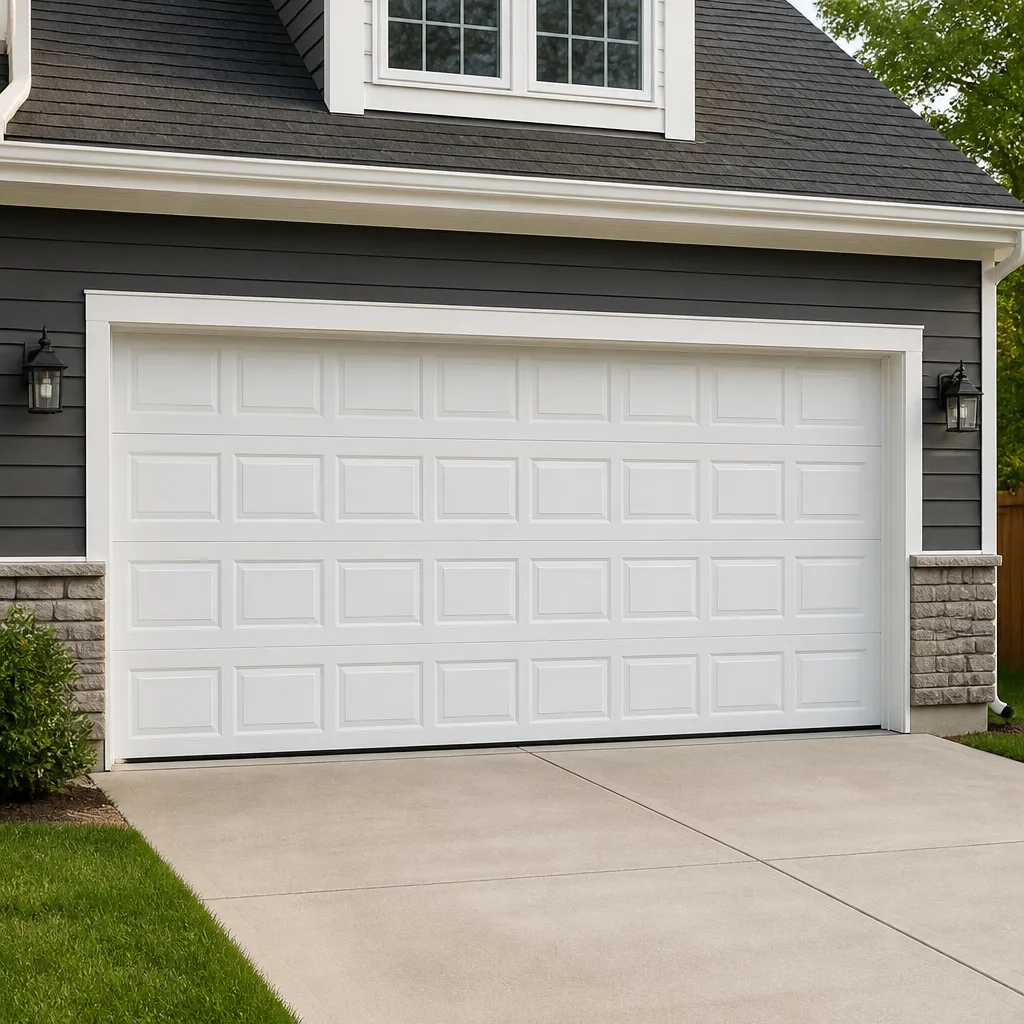 Raised-panel steel
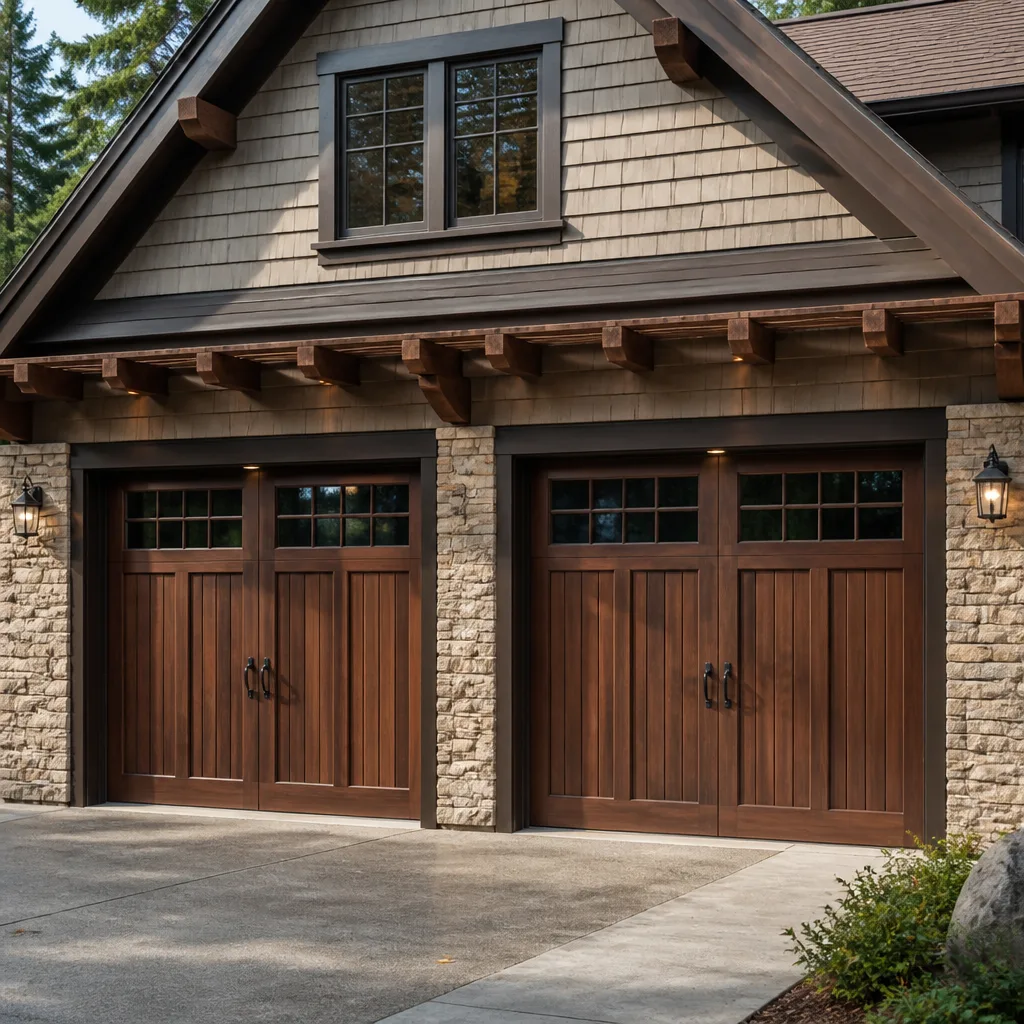 Carriage house
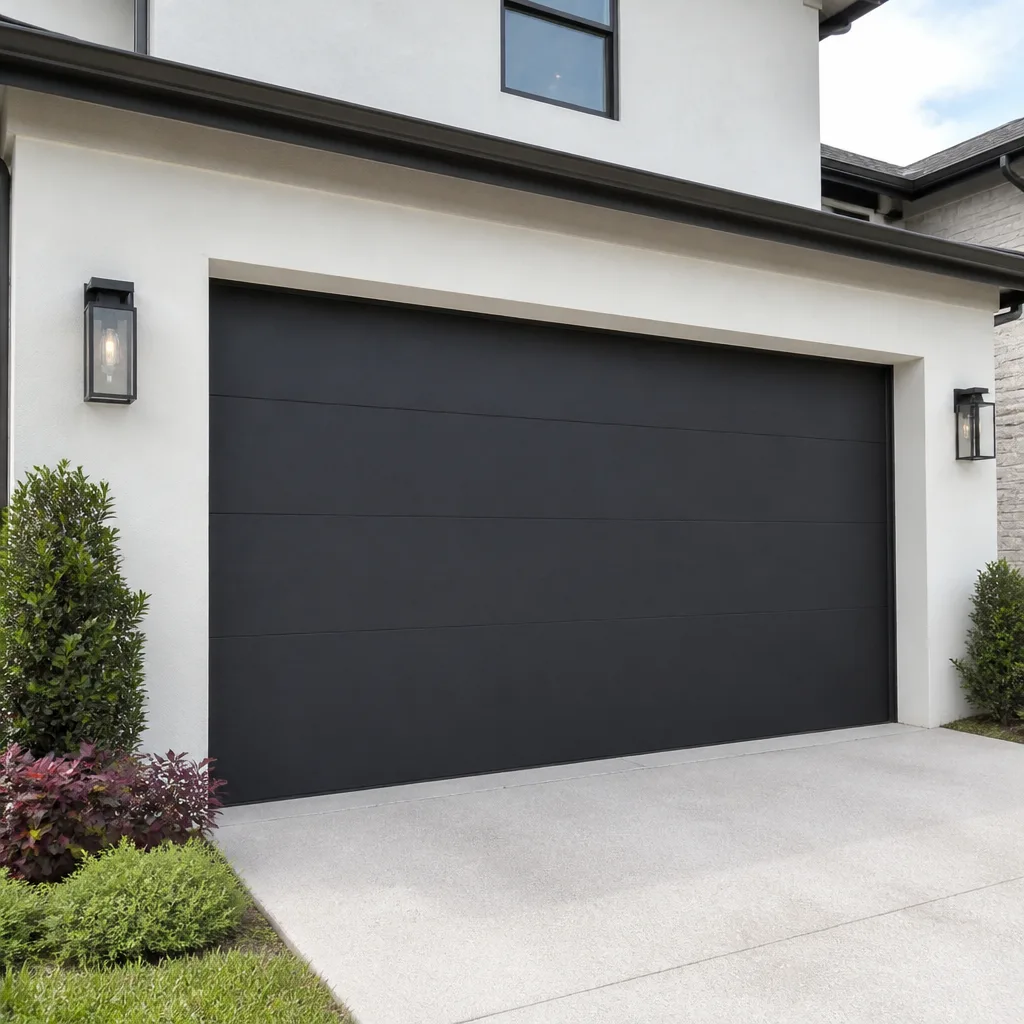 Modern flush
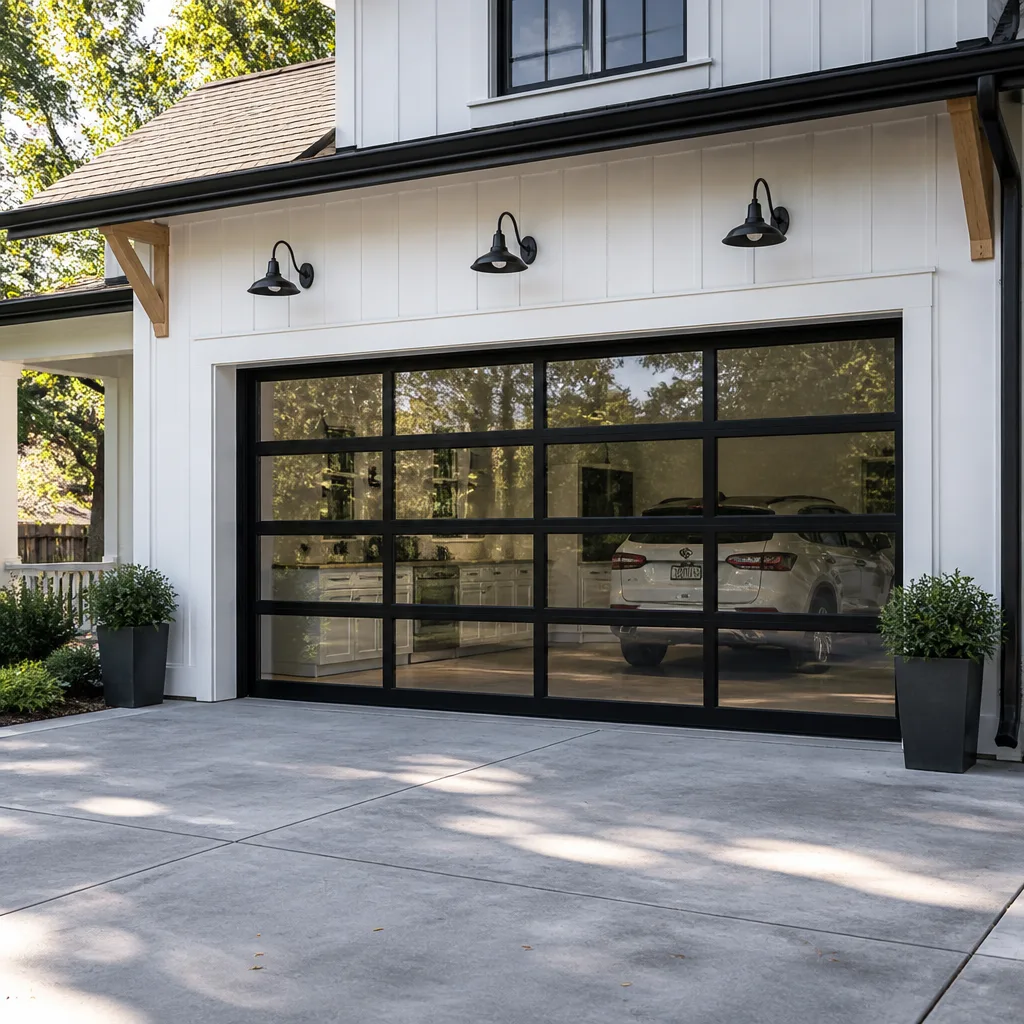 Full-view glass
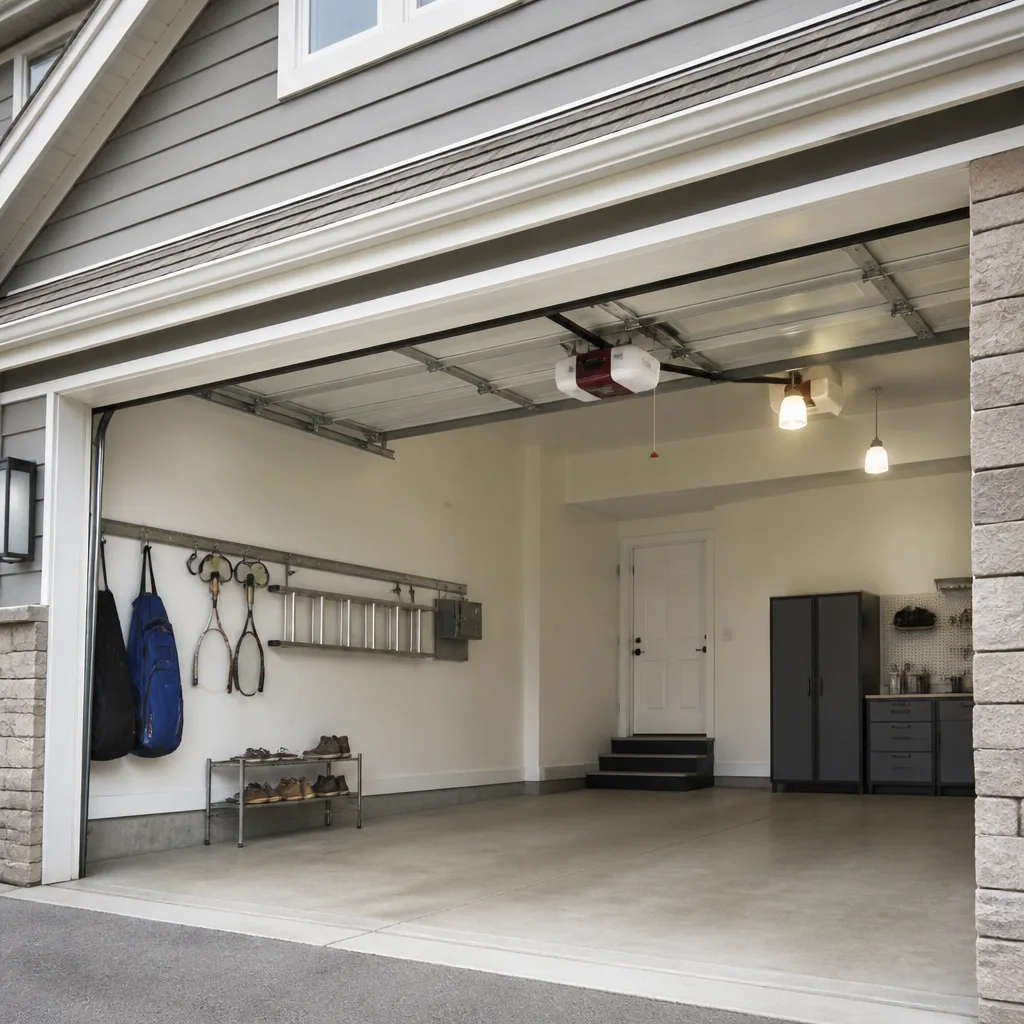 LiftMaster openers
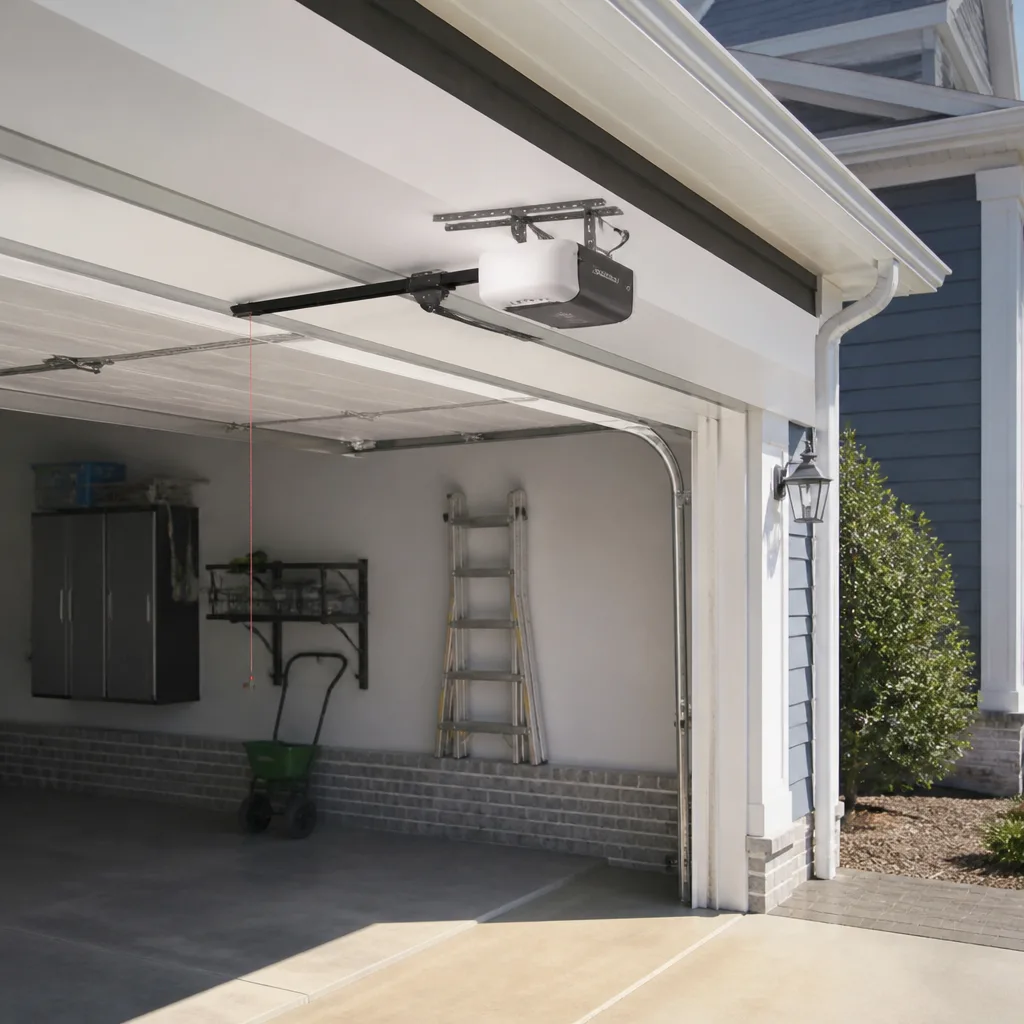 Chamberlain openers
Full 25-point door and opener safety check with every visit - springs, cables, rollers, tracks, and your LiftMaster or Chamberlain opener included
You get a price before we start. It does not change when the pro arrives.
Get your free estimateThe Complete Guide to Garage Doors in League City
Most garage door advice is written for a climate that doesn’t exist here. A steel door that lasts twenty years in a dry, inland city can start rusting along its bottom panel within a couple of years when the air stays heavy and wet most of the year. Insulation values, wind ratings, and even which brand of opener your neighbors run all shift depending on whether you’re a few miles from the bay or deeper into the subdivisions off Interstate 45. This guide treats your location as the real variable it is. You’ll learn how League City’s humidity, soil, and storm exposure shape every decision from spring repair to a full door replacement.
Quick Answer
Choosing and maintaining a garage door in League City comes down to three things: a door rated for coastal wind loads, materials that resist year-round humidity, and a service plan that catches spring, cable, and opener problems before they strand your car. Most homeowners here are best served by a galvanized or otherwise corrosion-resistant steel door, a wind-rated reinforcement package, and a professional who recognizes their exact opener and door brand rather than guessing at parts.
Styles & brands we work with
- Raised-panel steel
- Carriage house
- Modern flush
- Full-view glass
- LiftMaster openers
- Chamberlain openers
Table of Contents
- Why Gulf Coast Humidity Changes Your Material Choice
- Clay Soil and Door-Frame Misalignment
- Wind Load Ratings: What League City Actually Requires
- What Your Neighborhood Is Running, and Why It Matters
- New Construction vs. 1990s Retrofit Doors
- Spring Repair: The Highest-Risk Job on Your Door
- A Maintenance Rhythm That Fits the Climate
- Common Mistakes to Avoid
Why Gulf Coast Humidity Changes Your Material Choice
The single biggest material decision for a garage door in League City is how the steel is protected. Standard cold-rolled steel panels with a basic paint finish hold up well in dry climates. In a place where the air stays humid most of the year and afternoon thunderstorms are routine, that same finish breaks down faster, and once moisture reaches bare steel, rust begins at the bottom panel where water collects. Galvanized steel carries a zinc coating that sacrifices itself to protect the steel underneath, which is why it lasts longer in a humid market.
Here’s what we look at when a homeowner asks whether to repair or replace:
- Bottom panel condition. Rust that has eaten through the panel can’t be painted over. Once it’s structural, replacement is the only real fix.
- Panel coating. Galvanized and factory-baked finishes resist humidity better than field-painted steel.
- Insulation type. Polyurethane cores hold their shape and resist moisture better than polystyrene, which matters when the door faces the sun most of the day.
- Drainage at the threshold. Water that pools at the base of the door speeds corrosion, so the concrete apron and weather seal matter as much as the door itself.
Wood doors are the outlier. They look great on a custom home, but in League City’s humidity they need sealing and repainting on a tighter schedule than steel or aluminum. If you want the wood look without the upkeep, a steel door with a wood-grain finish is the practical compromise. Our goal when we recommend a door is to match it to the moisture it will actually live in, not to sell the most expensive option.
If your current door is already showing rust or sagging panels, the first step is an honest assessment. That’s where garage door repair starts, and sometimes the honest answer is that a repair costs more than it’s worth over the next few years.
Clay Soil and Door-Frame Misalignment
League City sits on expansive clay soil. That clay swells when it’s wet and shrinks when it’s dry, and that movement is slow but relentless. Over years, the concrete slab and the framing around a garage opening can shift just enough that the door no longer sits square. Homeowners notice the symptom before they understand the cause: the door drags on one side, the gap at the bottom is uneven, or the opener strains to lift a door that used to glide.
Frame misalignment is easy to misdiagnose. A door that binds on one side isn’t always a bad spring or a failing opener. Sometimes the opening itself has moved. Here’s how we separate the two:
- Run the door by hand with the opener disengaged and watch the gap on each side.
- Check whether the vertical tracks stay parallel to the door through the full travel.
- Look for cracks or settling in the concrete at the corners of the opening.
- Compare the bottom seal to the floor along its length; a consistent gap rules out frame movement.
If the framing has shifted, track adjustment or a shim at the hinge point can often bring the door back into alignment without replacing anything major. The key is catching it before the strain wears out the opener or the springs. If you’re hearing grinding or the door hangs up partway, it’s worth having it looked at rather than forcing it. Our technicians have up to 15 years of experience reading exactly this kind of symptom, and a quick diagnosis saves a much bigger repair later.
Wind Load Ratings: What League City Actually Requires
Wind load is the part of a garage door specification that most homeowners never think about until a storm is on the radar. A garage door is the largest opening in most homes, and when it fails in high wind, the pressure that gets inside can put the whole structure at risk. Doors are rated for wind pressure, and higher-rated doors use heavier gauge steel, deeper reinforcement struts, and stronger track and bracket hardware.
What matters for you is that a door rated for a mild inland market is not automatically built for the wind exposure here. Harris and Galveston County construction standards, and the local code official’s interpretation of them, generally call for a wind-rated assembly rather than a standard residential door. We don’t quote code section numbers or make legal claims, because the requirements are enforced by your city’s building department and can vary by the specific property. The practical move is to ask your building department what the door needs to meet before you buy, and to make sure the door and the reinforcement package are rated together as a system.
- Reinforcement struts. Horizontal struts stiffen the panels and are part of the wind rating, not an optional extra.
- Track and bracket strength. The rating only holds if the mounting hardware is rated for it too.
- Matched components. A heavy door on light hardware is a failure waiting to happen.
When we install a replacement, we spec the door, the struts, and the hardware together so the rating actually means something. That’s the difference between a door that carries a wind label and one that performs in a storm.
What Your Neighborhood Is Running, and Why It Matters
Parts availability is a quiet, practical issue that most guides skip. The brands installed most often in a given area become the brands that local technicians know best and that supply houses in the region keep in stock. When your opener or door is a common model in League City, a repair is usually faster because the parts are familiar and close by. When it’s an oddball, you can wait on a special order.
In the subdivisions around Clear Lake and the master-planned communities near the bay, the door brands we see most are Clopay, Amarr, Wayne Dalton, and Raynor. On the opener side, LiftMaster and Chamberlain dominate, with Genie and Craftsman showing up regularly on older homes. That mix tells you something useful: if your door is a Clopay or Amarr, or your opener is a LiftMaster or Chamberlain, you’re in good company and the fix should be straightforward.
We work on all eight of those brands specifically, which matters because a door manufacturer and an opener brand are two different systems. A technician who knows doors but not openers, or the reverse, will send you to someone else halfway through the job. Since we cover both, the same visit can diagnose a binding door and a confused opener without a second call.
New Construction vs. 1990s Retrofit Doors
A door on a home built in the last few years is a different animal from a door on a 1990s home in an older subdivision like Tuscan Lakes. New construction in this area typically arrives with a wind-rated door, a modern insulated panel, and an opener wired for smart features. Those doors are built to current standards and generally need less structural work to keep them compliant.
Older homes are a different story. A 1990s retrofit door may have been installed before wind reinforcement was standard, and it may be running an opener that predates modern safety reversing systems. Homeowners in those homes often face the same decision: keep reinforcing and repairing, or replace the whole assembly to current standards. Here’s the honest framing we use:
- Repair makes sense when the panels are solid, the springs and opener are serviceable, and the door just needs new hardware or a tune-up.
- Replacement makes sense when the panels are corroded through, the door lacks a proper wind rating, or the opener is at the end of its life.
There’s no universal answer. A well-kept 1990s door can serve for years with the right maintenance, and a poorly built newer door can fail early. The point is to replace based on condition and safety, not on age alone.
Spring Repair: The Highest-Risk Job on Your Door
Garage door springs are under extreme tension. They’re the counterweight that makes a heavy door feel light, and when one breaks it releases that stored energy instantly. This is the single repair we never recommend a homeowner attempt. The danger is real and immediate, and a mistake can cause serious injury. A trained professional treats spring repair as a safety job first and a repair second.
We handle spring repair as its own dedicated service because it demands the right tools and knowledge. When a spring lets go, the door usually won’t lift, and sometimes a single broken spring drops the door hard. Here’s what to expect from a proper repair:
- Identify the spring type. Torsion springs mount above the door; extension springs run along the sides. Each has its own safe handling procedure.
- Measure and match. Springs are sized by wire gauge, inside diameter, and length. The right spring matches the door’s weight.
- Replace as a pair. Matched springs are typically replaced together, because a spring that has held the same load as its twin is on the same clock.
- Rebalance the door. After replacing, the door is tested by hand to confirm it’s balanced and the opener isn’t overworking.
On price: a torsion spring repair in the League City area typically runs roughly $180 to $340 for one spring, and a matched pair is usually replaced together, so budget about twice that. The written estimate sets the final price, and we quote it before any work begins. That number is not a same-day premium; it’s just the job.
If you’d rather understand the full process, our page on garage door spring repair walks through what a technician actually does. If the door is stuck and you need it working, a pro is the safe way to get there.
A Maintenance Rhythm That Fits the Climate
A little routine care goes a long way in this humidity. Dust, grit, and moisture wear on the moving parts faster here than in a dry climate, so a simple monthly check prevents most of the problems we get called for. You don’t need special tools. Most of it is looking and listening.
Here’s the short monthly routine we recommend:
- Look at the bottom seal. A hardened or cracked seal lets water and pests in and is easy to replace.
- Listen for grinding or squealing. Noise usually means rollers or hinges need lubrication, and dry metal wears faster.
- Test the safety reverse. Put a small object under the door and confirm it reverses on contact.
- Watch the balance. Disengage the opener and lift the door halfway. If it won’t stay put, the springs need attention.
- Check the tracks. A track that’s been knocked out of line will cause binding and opener strain.
None of this replaces a professional inspection, but it catches the small problems before they become spring failures or opener replacements. When the door starts misbehaving, a quick look at our garage door opener repair page helps you narrow down whether the problem is the opener or the door itself.
Common Mistakes to Avoid
- Treating the door and the opener as one system. They’re separate, and a failure in one often gets blamed on the other. Diagnose both before you replace anything.
- Ignoring bottom-panel rust. In this climate, rust at the base is the first sign of a coating failure. Left alone, it spreads and eventually calls for a new panel or a new door.
- Replacing one spring. Matched springs work as a pair. Replacing one leaves the older spring on borrowed time and the door out of balance.
- Skipping the wind rating. A standard door without reinforcement is a false economy in a windy region. Confirm the door and hardware are rated together.
- Forcing a binding door. If the door drags, the opener or the track is suffering. Forcing it wears both out and can damage the panels.
- Buying hardware across brands. A hinge or roller made for one brand’s door may not fit another. Match the part to your exact model.
- Putting off the free estimate. A small issue caught early usually costs less than a failure caught late. Estimates are free, so there’s no reason to wait.
See the difference
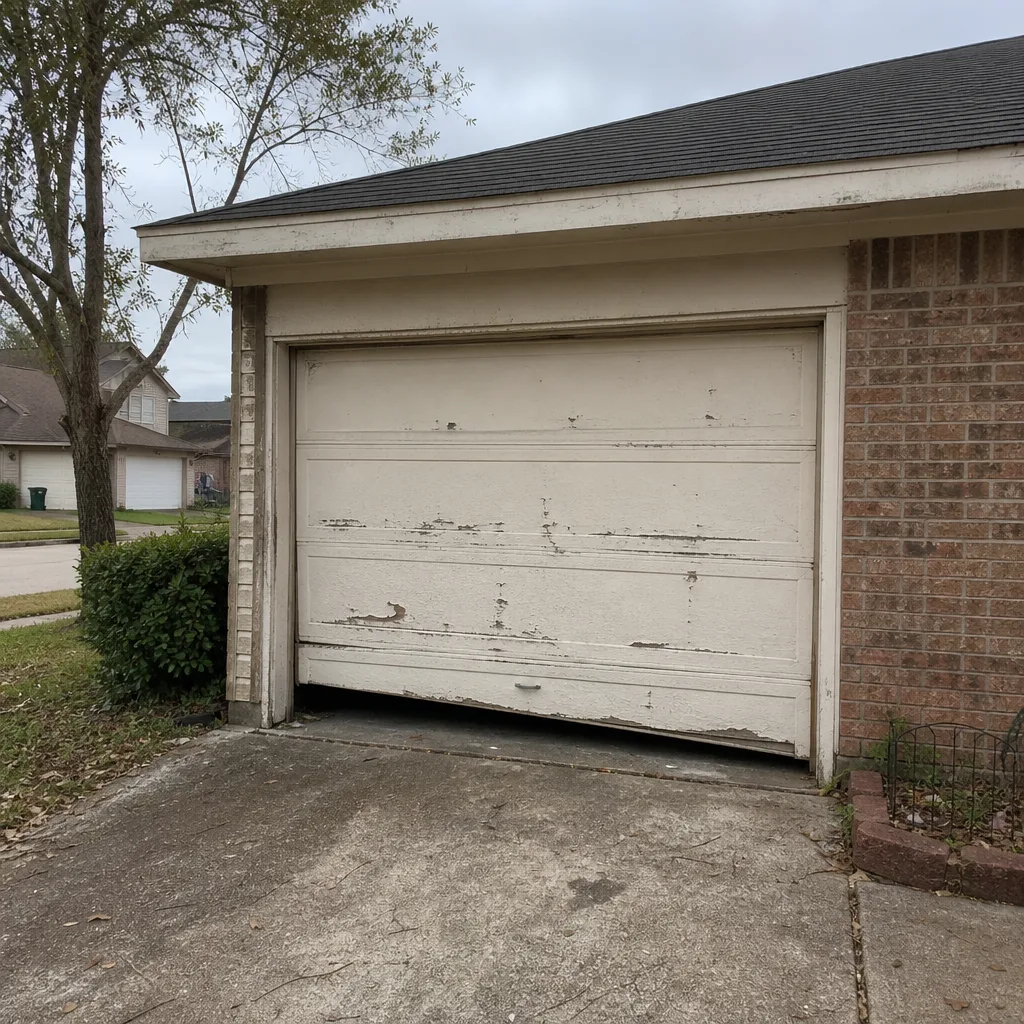 Before
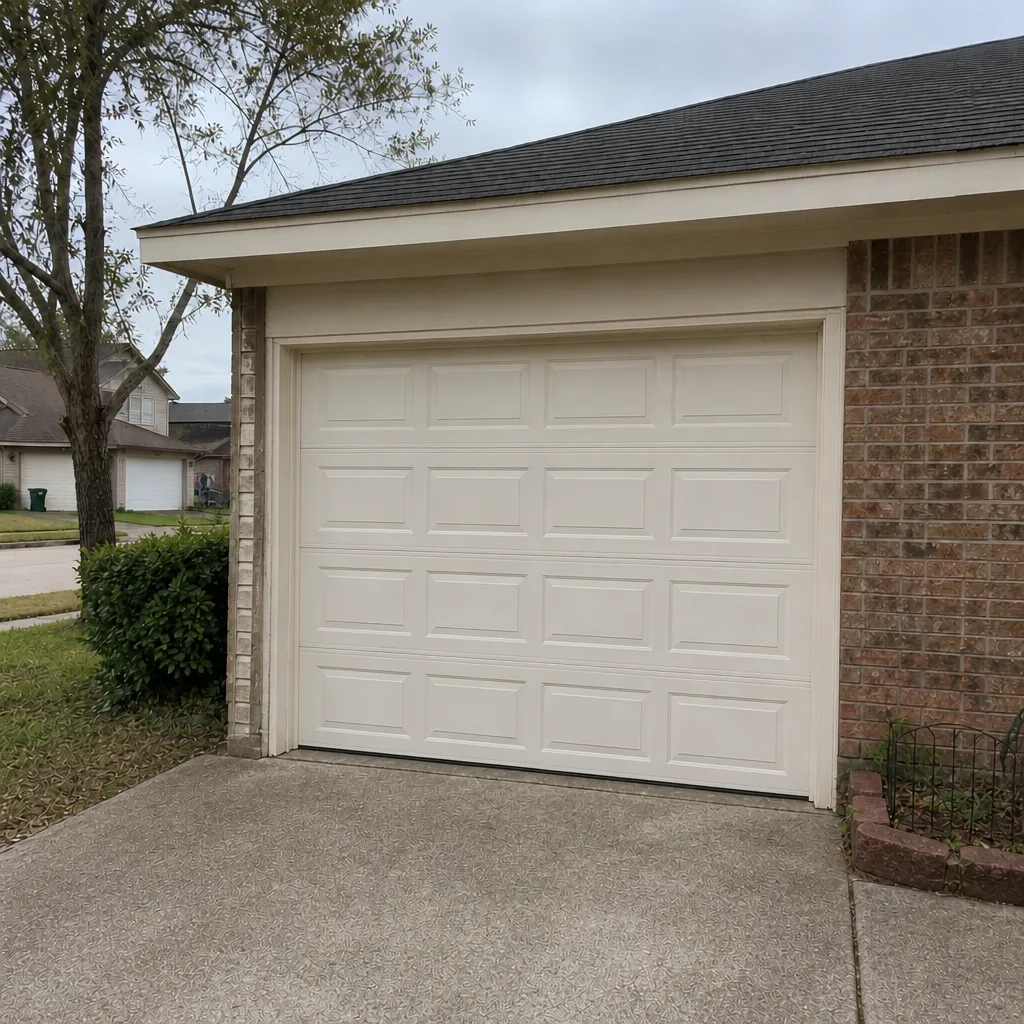 After
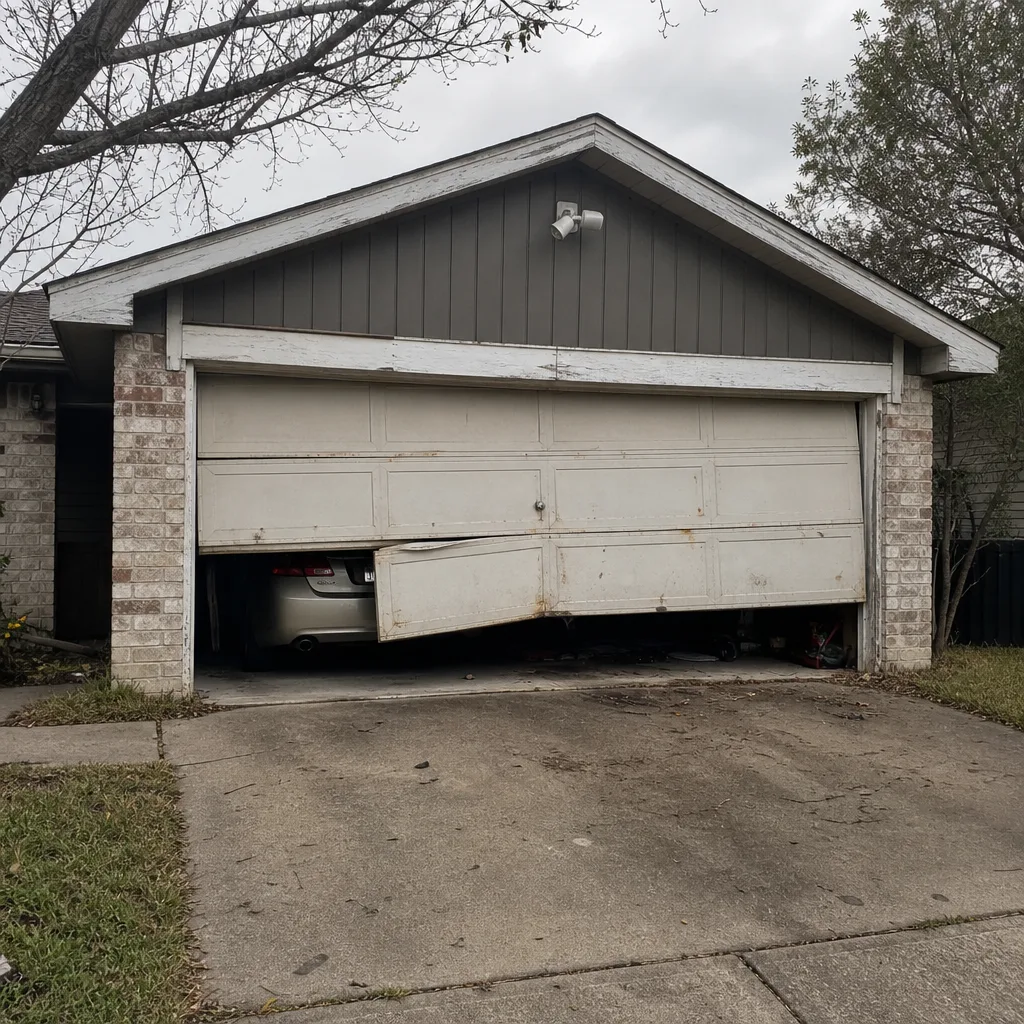 Before
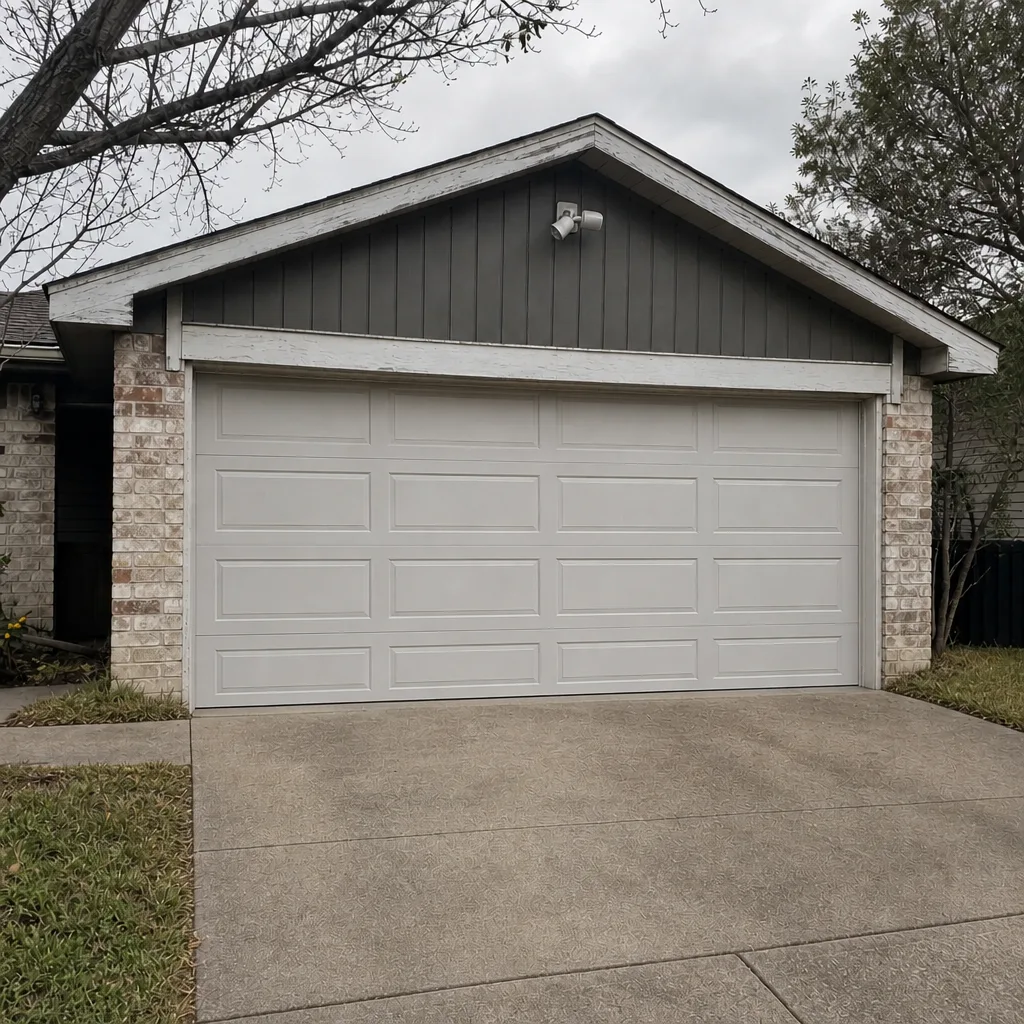 After
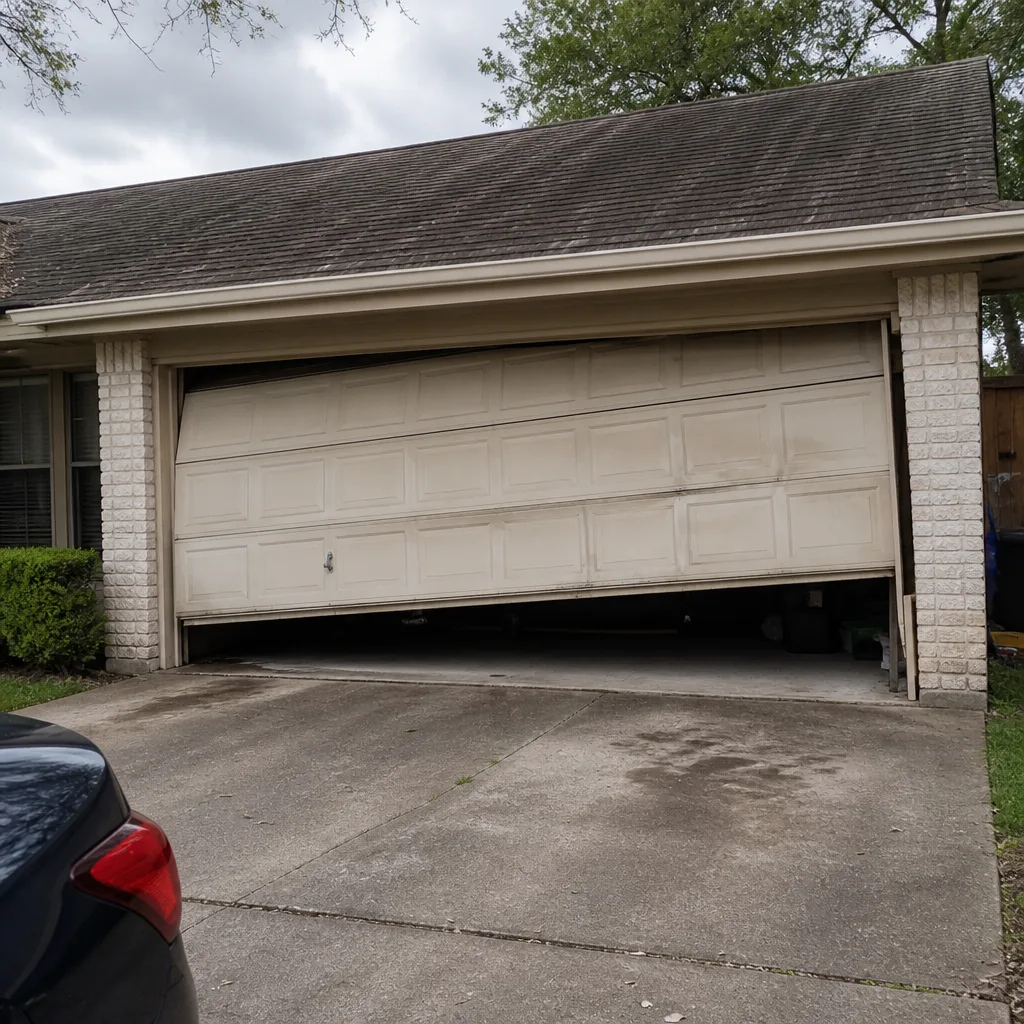 Before
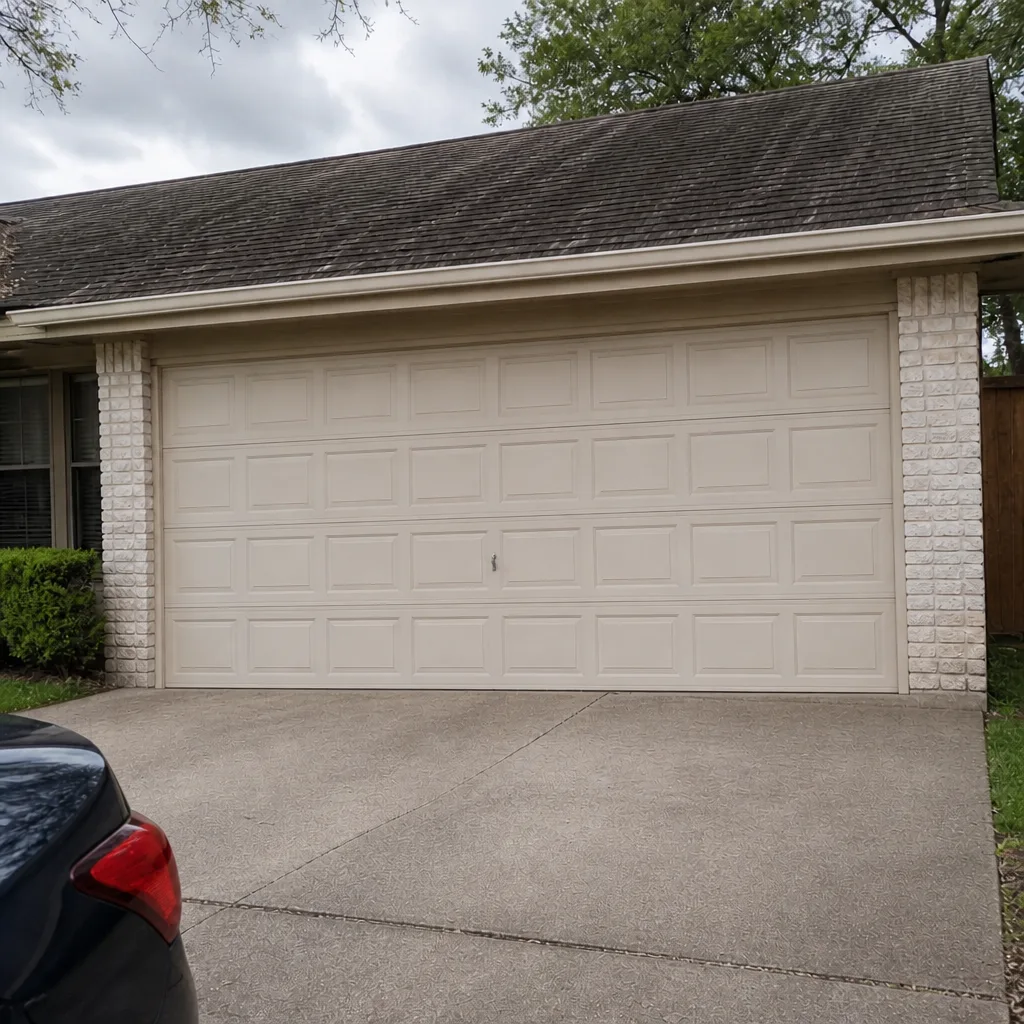 After
When to Call a Professional
Some jobs are fine to tackle yourself, and some are not. If the breaker trips, the opener won’t respond, or the door won’t close on its own, these are calls worth making. If you hear a loud bang and the door won’t lift, a spring has likely broken and that’s a job for a trained pro, without question. And if you’re seeing rust through the panels, a door dragging on one side, or a track that’s pulled out of the wall, a professional diagnosis will save you time and money over guessing.
League City Garage Door Repair Pros offers free estimates in League City. Call (866) 651-6896 to set one up. We answer 24/7. Fast dispatch from 7am to 7pm, Sunday through Friday.
When you call, you’re talking to a company that works on LiftMaster, Chamberlain, Genie, Clopay, Amarr, Wayne Dalton, Craftsman, and Raynor every week. If your door or opener is one of those, the technician arrives already familiar with the hardware.
Frequently Asked Questions
A torsion spring repair in the League City area typically runs about $180 to $340 for one spring, and a matched pair is usually replaced together, so expect roughly double that. The written estimate sets the final price, and you get it before any work starts. Call (866) 651-6896 for an exact quote: estimates are free.
Often yes. Spring repairs, opener failures, and doors that won’t close are typically handled the same day when the parts are on hand. Call (866) 651-6896. We answer 24/7, and fast dispatch runs from 7am to 7pm, Sunday through Friday.
Replace both. Matched springs carry the same load, so when one breaks the other is on the same clock. Replacing just one leaves the door out of balance and sets you up for a second repair soon after. A professional will confirm the right pairing for your door.
Year-round humidity and water that collects at the door’s base speed up corrosion in this climate. Standard steel with a basic finish breaks down faster than galvanized steel, and the bottom panel is where moisture sits. If the rust has reached the structure of the panel, replacement is the real fix.
You need a door rated for the wind load it will face, and that rating depends on the door, the reinforcement struts, and the hardware working together. Check with the city’s building department on what your property must meet before you buy. A pro can spec the assembly so the rating genuinely holds.
The local professionals we connect you with are licensed and insured as their state requires. Our technicians have up to 15 years of experience, and spring repair is a standard part of what we do. Call (866) 651-6896 for a free estimate.
The Bottom Line
A garage door in League City has to handle humidity, clay-soil movement, wind exposure, and a mix of older and newer homes. Get the materials right, confirm the wind rating with your building department, keep the moving parts clean, and never force a spring repair. Know your exact door and opener brand, because matching parts to the model is what makes a repair last. For the decisions that matter, a free estimate and a written price give you the clarity to choose with confidence. If you want to understand the full range of what we handle, our League City Garage Door Repair Pros page is the place to start.
Call (866) 651-6896 for a free estimate. We answer 24/7. Fast dispatch from 7am to 7pm, Sunday through Friday.
Written by the team at League City Garage Door Repair Pros.